
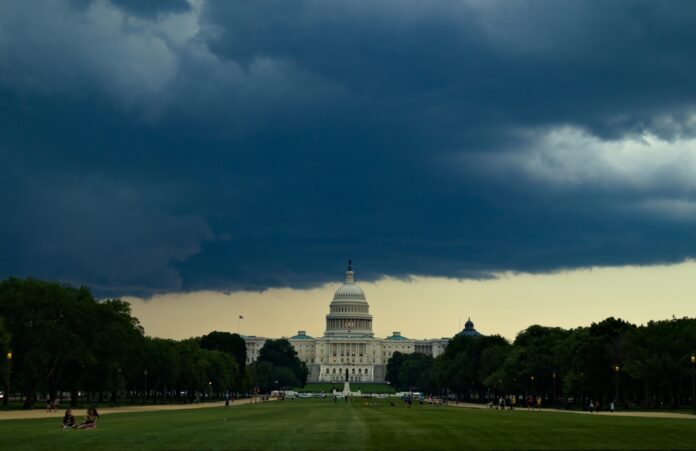

Washington, D.C. — October 2025
The United States federal government entered a partial shutdown on October 1, 2025, after lawmakers failed to reach an agreement on a new budget, resulting in the furlough of nearly 900,000 federal employees and the suspension of many non-essential services. The shutdown — the first since 2019 — has raised concerns about its potential economic impact amid an already fragile recovery.
A Political Stalemate in Congress
The deadlock stems from a budget impasse between the Republican-controlled House of Representatives and the Democratic-led Senate, centered around spending cuts, social program funding, and debt reduction. Negotiations collapsed late Sunday evening, triggering an automatic lapse in appropriations for key federal departments, including transportation, housing, and education.
President Kamala Harris urged Congress to “act responsibly and swiftly” to restore government operations, warning that prolonged inaction could “undermine public trust and weaken economic stability.” House Speaker Mark Meadows, however, maintained that the administration must “address runaway spending before any deal can move forward.”
Economic Consequences Loom
Analysts estimate that a prolonged shutdown could reduce U.S. GDP growth by 0.2 percentage points per week, depending on its duration. According to Moody’s Analytics, if the standoff continues for more than three weeks, it could cost the economy over $10 billion and delay critical government data releases, including jobs and inflation reports.
The closure has immediate consequences for government employees and contractors. National parks, museums, and public offices across the country have been shuttered, while small businesses reliant on federal contracts face severe disruptions.
“This comes at a delicate time for the U.S. economy,” said Diane Swonk, chief economist at KPMG. “Consumer confidence is weakening, inflation remains stubborn, and the Fed is still walking a tightrope between supporting growth and controlling prices.”
Market and Investor Reactions
Financial markets initially reacted with caution. The S&P 500 slipped 0.6% on Monday’s open, while the U.S. dollar weakened slightly against major currencies. Treasury yields also dipped as investors moved toward safe-haven assets like gold and bonds.
Wall Street analysts say markets are accustomed to political gridlock but warn that a lengthy shutdown could erode investor sentiment. “If the shutdown drags on into mid-October, we may see broader sell-offs across sectors tied to consumer spending and federal contracts,” said Mark Zandi, Chief Economist at Moody’s.
Meanwhile, credit rating agencies are closely monitoring developments. Fitch Ratings, which downgraded the U.S. credit rating in 2023 due to fiscal instability, warned that another prolonged political standoff could “further damage perceptions of governance effectiveness.”
Federal Workers and Public Impact
Roughly 3.5 million federal employees are affected in some way — with nearly 900,000 placed on temporary leave and others required to work without immediate pay. Agencies such as the IRS, EPA, and Department of Commerce have suspended routine operations. However, critical services such as national security, air traffic control, and Medicare payments remain active.
“I have bills to pay and kids to feed — it’s frustrating to be caught in the middle of political games,” said Maria Gonzales, a furloughed federal employee in Virginia. Similar sentiments have echoed across social media, where hashtags like EndTheShutdown and PayOurWorkers are trending.
Global Implications
International observers are also watching closely. The shutdown has rattled global markets amid concerns over potential ripple effects on U.S. trade commitments, aid programs, and defense operations abroad. Asian and European markets dipped slightly following the announcement, with investors seeking clarity on how long the impasse might last.
“This political paralysis in Washington sends the wrong message at a time when the world needs U.S. economic leadership,” commented Dr. Hans Becker, economist at the World Economic Forum. “Global supply chains and financial stability depend on a functioning U.S. government.”
Political Pressure Mounts
As the shutdown enters its second week, pressure is mounting on both parties to find common ground. The White House has indicated willingness to discuss targeted spending reviews, but Republicans insist on deeper cuts to welfare programs and climate-related initiatives.
Political analysts note that the standoff could have long-term electoral consequences. “Neither side wants to appear weak heading into the 2026 midterms,” said Amy Walter, editor of The Cook Political Report. “But voters are increasingly impatient with Washington’s dysfunction.”