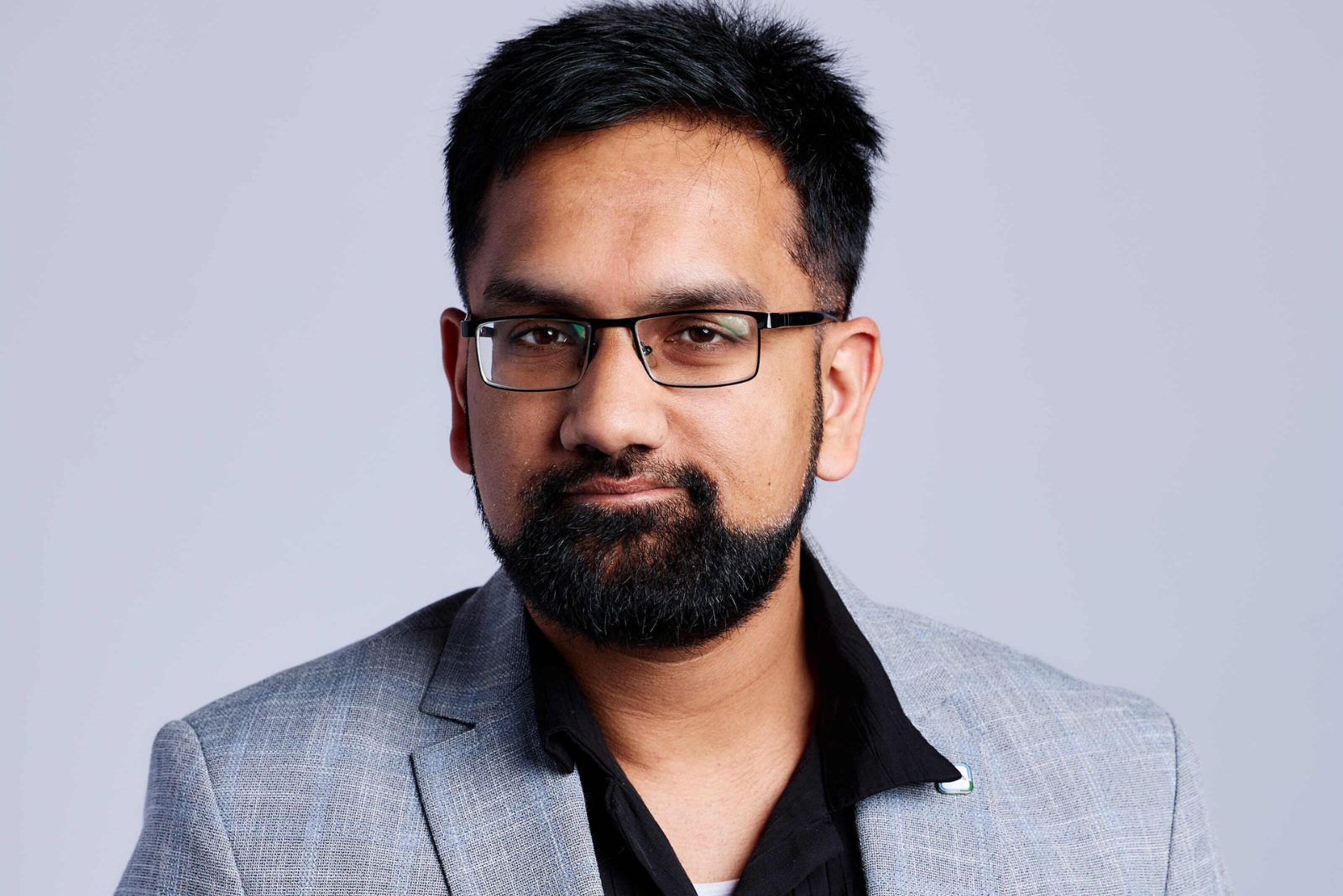
In today’s fast-moving digital world, where artificial intelligence and connected systems are everywhere, cybersecurity is no longer just about protecting systems it’s about building trust. Adeel Shaikh Muhamad, a Cybersecurity Strategist and AI thought leader, represents this shift in a very real way.
With over a decade of experience across cybersecurity, infrastructure, and AI, his journey is guided by a simple belief: technology only matters when people trust it.
From Curiosity to Cybersecurity Leadership
Adeel’s interest in technology started early. Growing up around computers thanks to his father’s computer training institute he was naturally drawn to understanding how systems worked.
“I was always curious,” he shares. “I liked exploring how things functioned and what could go wrong.”
Over time, that curiosity turned into a career path. Starting from helpdesk roles, he moved through systems, networking, and architecture, eventually becoming a Field CISO. Along the way, he realised something important building systems is only part of the job; securing them is what truly matters.
For him, the idea is simple, technology has value only when it earns trust.
A Global Perspective on Cybersecurity
Working across regions like the Middle East, Africa, Pakistan, and the United States has given Adeel a broad view of cybersecurity.
“One thing I’ve learned is that there’s no one-size-fits-all approach,” he explains.
Every organisation operates differently. A bank in Riyadh faces very different challenges compared to a fintech company in San Francisco. Because of this, security strategies need to be flexible and aligned with business needs, regulations, and culture.
Frameworks like ISO 27001 or NIST are useful, but they’re just starting points. As Adeel puts it “Security has to fit the organisation not the other way around.”
How AI is Changing Security
Artificial intelligence is transforming how cybersecurity works, especially in security operations.“AI is helping us respond to threats faster than ever before,” Adeel says.
Through his research, he has seen how traditional security operations once filled with manual work and alert overload are now becoming smarter and more efficient. Analysts can focus more on critical thinking, like identifying threats and simulating attacks, instead of handling repetitive tasks.
At the same time, he points out an important concern: AI also brings new risks, such as data manipulation and model misuse. The key is to use AI wisely while keeping proper controls in place.
Key Challenges Organisations Still Face
Despite all the advancements, some challenges remain constant.The first is identity. “Identity is now the new perimeter, but many organisations still don’t treat it seriously enough.”The second is data. With information spread across cloud platforms and AI systems, many companies struggle to track and manage it properly.
The third is the growing talent gap. Cyber threats are evolving quickly, and there aren’t enough skilled professionals to keep up.His advice is straightforward: focus less on tools and more on fundamentals like identity, data, visibility, and people.
Learning from Real-World Experience
Adeel has worked on several large-scale projects across regions and industries, each offering valuable lessons.From building cybersecurity ecosystems with partners, to leading advisory roles for government organisations, to working in highly secure environments each experience has shaped his approach.
From building cybersecurity ecosystems with partners, to leading advisory roles for government organisations, to working in highly secure environments each experience has shaped his approach.One notable example was his work on disaster recovery for Smart Dubai Government. “At that level, everything has to work perfectly,” he says.
These experiences taught him that a cybersecurity leader must think beyond technology balancing strategy, operations, and business needs.
Sharing Knowledge Through Writing
Apart from his professional work, Adeel is also an author.His first book focuses on how AI is transforming security operations, while his second explores the ethical side of AI covering topics like bias, privacy, and responsibility.
His message is clear, “AI is a powerful tool, but its impact depends on how we use it.”
Making Cybersecurity Easy to Understand
Having spoken at over 500 events, Adeel believes that one of the biggest challenges in cybersecurity is communication.“We often make things too complicated,” he says.
Instead of using technical jargon, he prefers simple language, real examples, and relatable stories. His goal is to make cybersecurity easy to understand for everyone whether they are business leaders or technical professionals.
The Importance of Continuous Learning
With over 50 certifications, Adeel sees learning as an ongoing process rather than a one-time achievement.
“Every certification helped me look at problems differently,” he explains. Along with certifications, he continues to stay involved in research and hands-on learning. But for him, curiosity and humility matter more than any title or credential.
Connecting Cybersecurity with Business
Adeel strongly believes that cybersecurity is not just a technical topic it’s a business one.Instead of focusing only on costs, he encourages organisations to think in terms of risk and value. By identifying what matters most to the business, security efforts can be more focused and effective.“When security supports growth and builds trust, it becomes a real advantage,” he says.
Recognition and Responsibility
Adeel has received several recognitions in the cybersecurity space, but he views them differently.“For me, recognition is not the end it’s a responsibility.”
He uses his platform to support and guide others, especially professionals from regions that don’t always get enough representation.
Looking Ahead
According to Adeel, the future of cybersecurity will be shaped by areas like AI-driven security operations, stronger identity-based models, evolving regulations, and a greater focus on resilience.“Breaches will happen” he says. “What matters is how quickly you recover.”
A Vision for the Future
Adeel hopes to contribute to a future where security is strong yet seamless, and where AI helps defenders stay ahead of threats.
He also aims to continue mentoring professionals and contributing to the field in meaningful ways.
Final Thoughts
Adeel Shaikh Muhamad’s journey shows how cybersecurity is evolving from a technical function to a strategic and trust-driven discipline.
At its core, his message is simple: the future of cybersecurity is not just about technology it’s about trust, responsibility, and understanding people.