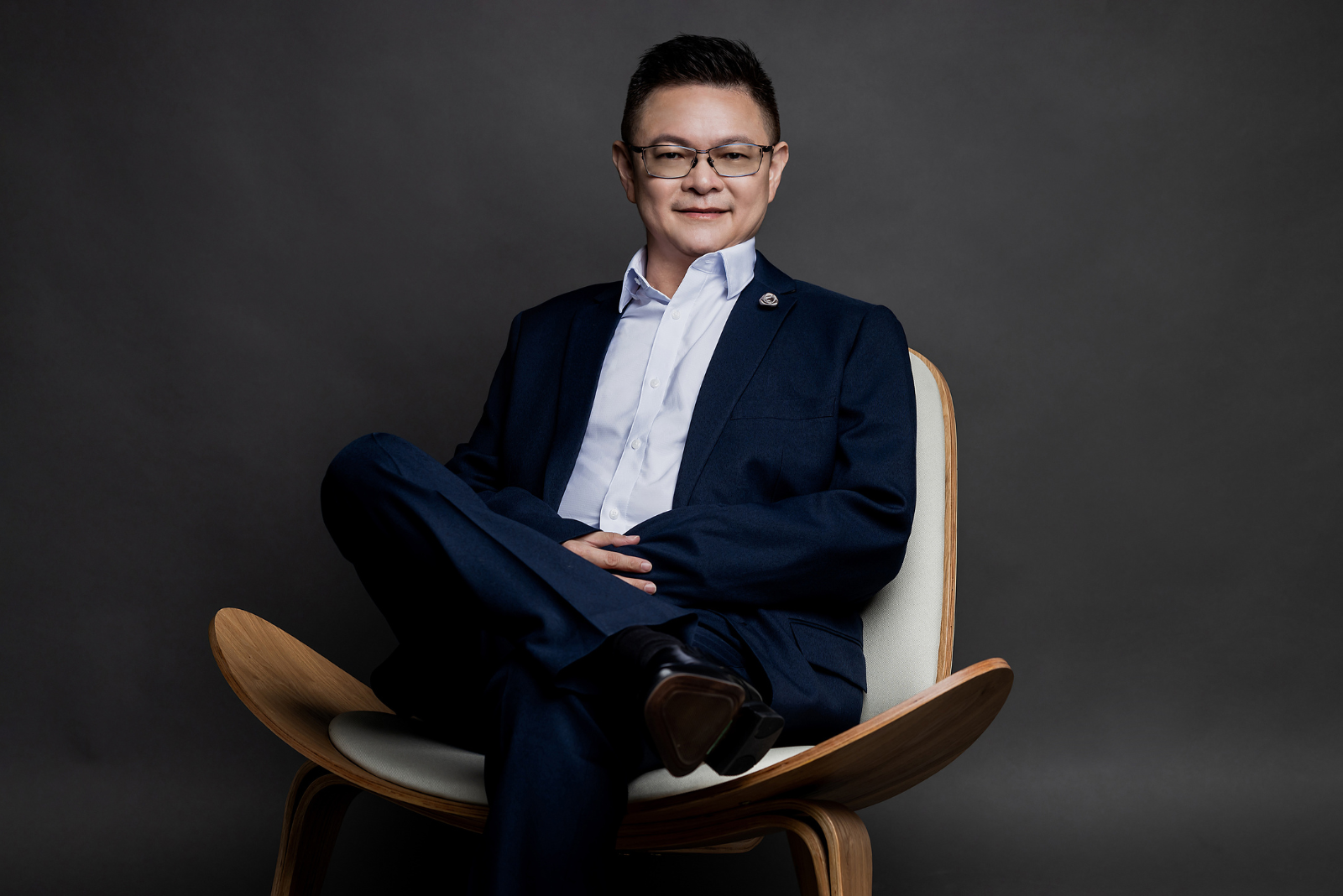
In a business landscape obsessed with speed, scale, and visibility, the most enduring transformations often come from leaders who operate quietly, deliberately, and with profound clarity. Ching Ping Lee belongs firmly in this category. His leadership does not chase attention; it shapes outcomes. And in an era where digital transformation is frequently mistaken for infrastructure upgrades, he offers a more grounded truth: transformation is human before it is technological.
“Technology is not the transformation. It is the vessel that carries culture, intent, and behaviour.”
This belief took shape early in his career, during his involvement in large-scale digital systems and early OTT deployments. While many focused on platforms and performance metrics, Ching observed something more fundamental. Systems only created value when they changed behaviour. Infrastructure enabled possibility, but people determined impact. That insight became the foundation of how he approaches enterprise-scale digital transformation today, starting with trust, designing for people, and using technology to scale what already works.
Across a career spanning media, hospitality, enterprise technology, and consulting throughout APAC, his leadership philosophy has remained remarkably consistent. Industries may change, but people do not. Empathy builds trust. Excellence sustains credibility. Alignment allows execution to scale. When teams feel understood and connected to purpose, transformation stops being episodic and becomes repeatable.
“When people feel aligned to the ‘why,’ execution becomes natural, regardless of industry or geography.”
One of the most defining moments of his career came during the expansion of an OTT platform across multiple markets. The challenge was not technological sophistication, but orchestration. Content rights, cloud migration, user experience, and regulatory compliance had to move in parallel, at speed, across regions. Success depended on cross-functional alignment, not technical acceleration. The experience reinforced a lesson that would stay with him: transformation succeeds when clarity moves faster than technology.
At the core of Ching’s decision-making framework are three values that guide him, especially in high-pressure and regulated enterprise environments: integrity, innovation, and impact. Integrity ensures decisions withstand scrutiny long after delivery. Innovation challenges assumptions and prevents stagnation. Impact keeps focus on outcomes that matter. Together, they form a compass that balances ambition with responsibility and speed with safety.
“Integrity keeps decisions defensible. Innovation keeps them relevant. Impact keeps them meaningful.”
Working at the intersection of innovation, compliance, and governance has shaped his ability to balance creative disruption with regulatory responsibility. Rather than viewing compliance as a limitation, Ching approaches it as a design parameter. By understanding regulatory intent rather than merely following rules, he creates solutions that are innovative within boundaries. When governance is treated as an enabler, disruption becomes sustainable and trust becomes scalable.
Leading geographically distributed, cross-cultural teams has further refined his approach to leadership. Trust is built through consistency. Alignment comes from clarity. Execution thrives on empowerment. Physical location matters far less than shared purpose. When teams understand why they are doing the work, they take ownership of how it is done.
During his time at Resorts World Sentosa, Ching played a key role in bridging IT and OT environments through long-term network and modernization strategies. The integration presented real risks around security, interoperability, and legacy systems. Yet it also unlocked opportunities to modernize operations, improve resilience, and elevate guest experience. The real challenge was not technical, but strategic, aligning stakeholders around long-term value rather than short-term complexity.
As AI-powered customer engagement and automation initiatives continue to accelerate, Ching emphasizes restraint alongside innovation. AI, in his view, should remove friction, not introduce it. He designs AI solutions by mapping real user journeys and ensuring the technology feels intuitive rather than intrusive.
“When AI augments human capability instead of replacing it, adoption becomes effortless.”
His leadership style is often described as one of “quiet influence.” In environments that reward visibility and speed, quiet influence creates stability. It prioritizes clarity, consistency, and credibility over theatrics. Trust is built slowly, but once established, it scales across teams, systems, and organizations.
Psychological safety is another cornerstone of his leadership approach. Innovation flourishes when people can challenge ideas without fear. By listening deeply, inviting dissent, and rewarding curiosity, he creates environments where teams think boldly. Accountability, meanwhile, is sustained through clear expectations and shared ownership.
“Safety fuels innovation. Accountability sustains it.”
As governance frameworks evolve around emerging technologies such as generative AI, Ching sees a fundamental shift in the role of technology leaders. A decade ago, leadership centered on systems and delivery. Today, it extends to ethics, transparency, and societal impact. With AI, leaders must safeguard trust while enabling innovation, designing frameworks that protect people as much as platforms.
Despite rapid progress, many organizations remain hindered by misconceptions. AI is not plug-and-play. Transformation is not purely technical. Culture does not adapt automatically. Without redesigning workflows, shaping behavior, and intentionally aligning culture, even the most advanced technologies fail to deliver lasting value.
Aligning stakeholders around long-term transformation, especially amid short-term disruption, remains one of the most complex leadership challenges. Ching addresses this by making long-term value visible, quantifying early wins, and communicating transparently throughout the journey. When people understand the purpose behind disruption, they remain committed through what he calls the “messy middle.”
His career spans both enterprise leadership roles and independent consulting, requiring a nuanced shift in mindset. Within large organizations, he builds systems that scale within governance frameworks. As a consultant, he operates with speed, neutrality, and focus, unblocking complexity rather than owning it. The distinction is simple: enterprises require system builders; consulting requires system enablers.
Personal reinvention has been a constant thread throughout his journey. For Ching, reinvention is not about changing identity, but expanding capacity. He remains grounded by anchoring himself to purpose, values, and lived experience. Authenticity emerges naturally when who you are aligns with how you lead.
A defining professional setback early in his career reinforced this belief. It taught him that titles are temporary, but character is permanent. The experience sharpened his resilience, deepened his humility, and strengthened his leadership foundation. Looking ahead, Ching believes the next generation of technology leaders must blend systems thinking, ethical reasoning, AI literacy, and cultural intelligence. As technology accelerates, leadership must evolve even faster.
He envisions a future where technology leaders move beyond system ownership and become ecosystem stewards, responsible for trust, governance, and societal impact.