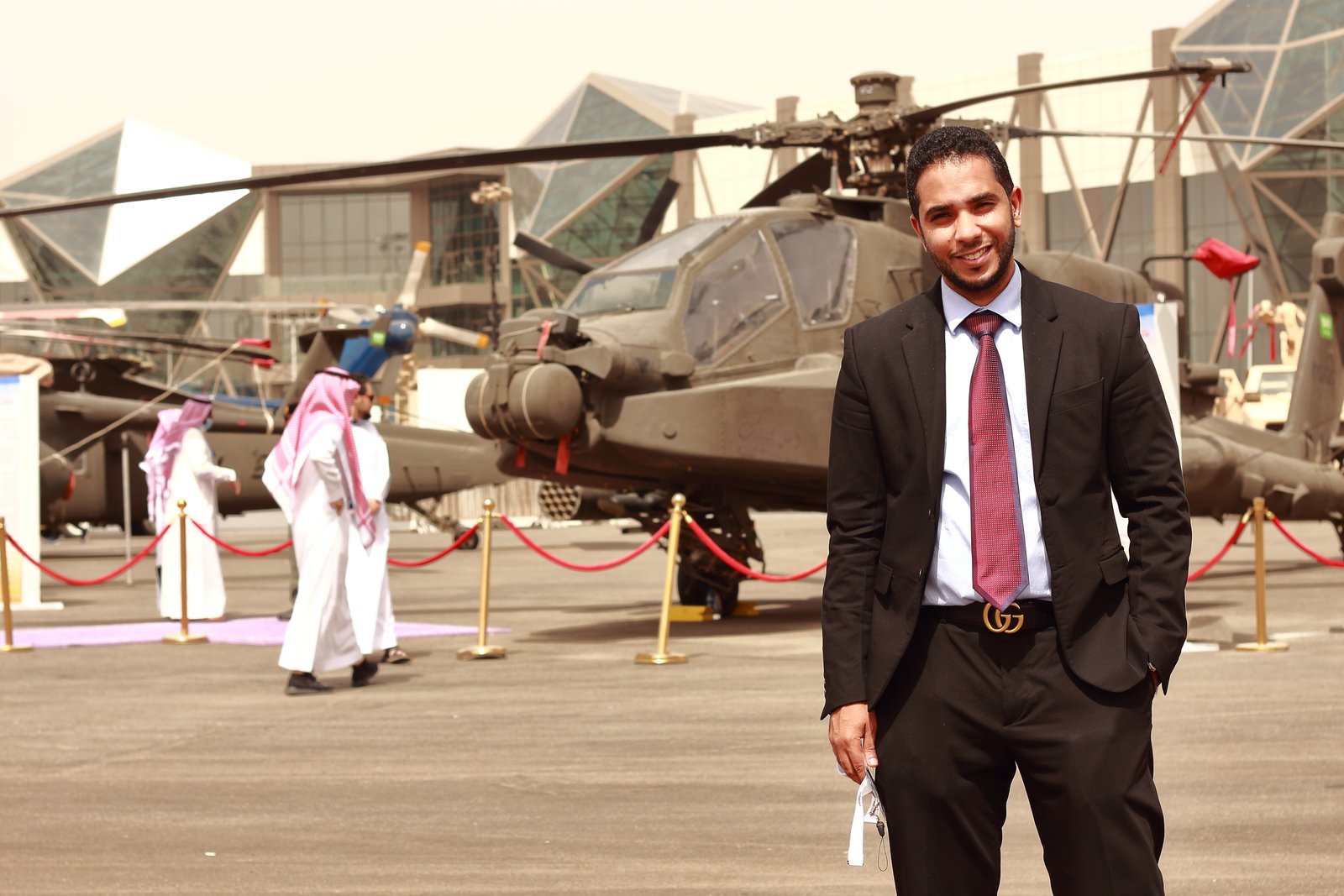
In industries where precision is non-negotiable and mistakes carry long-term consequences, leadership is not defined by authority alone, but by depth of understanding, discipline of execution and ethical responsibility. Few leaders embody this balance as clearly as Omar Amin Mustafa Omar, P.E., Chief Executive Officer and Principal Engineer at Mayar Gulf Engineering Consultants. His career—spanning mechanical engineering, quality systems, manufacturing, aerospace, defense and executive leadership—reflects a rare ability to integrate technical rigor with strategic and commercial clarity.
Omar’s leadership journey has never followed a single linear path. Instead, it has been shaped by deliberate exposure to complexity. From hands-on mechanical design and analysis to overseeing quality assurance frameworks and managing full P&L accountability, each chapter has strengthened his belief that organizations function as interconnected systems rather than isolated departments.
As he explains, “Having progressed from hands-on mechanical design and analysis to quality systems, manufacturing operations and executive leadership, I view organizations as integrated technical and business ecosystems.” This systems-oriented mindset sits at the core of how he leads, makes decisions and builds sustainable engineering organizations.
A Multidisciplinary Foundation That Shapes Leadership Philosophy
Omar’s leadership philosophy is deeply rooted in engineering discipline. Early in his career, technical accountability taught him that every design decision carries downstream implications—on safety, cost, compliance and reputation. These lessons now inform his approach as a CEO. “Engineering rigor, risk management and process discipline must coexist with strategic agility and financial stewardship,” he says.
This belief enables him to navigate executive decisions with both analytical depth and commercial realism. Rather than separating technical excellence from business performance, Omar treats them as mutually reinforcing forces.
Bridging Global Standards With Regional Execution
As a licensed Professional Engineer in Texas and a CEO operating from Riyadh, Omar works at the intersection of global engineering standards and regional market realities. His approach is anchored firmly in internationally recognized frameworks such as AS9100, ISO standards and professional engineering ethics. “These standards provide a universal technical language that transcends geography,” he explains.
However, Omar is equally conscious that standards cannot be applied in isolation. Regional regulations, workforce maturity and market dynamics require thoughtful adaptation. His leadership focuses on contextualizing global best practices to ensure compliance without compromising operational efficiency or competitiveness.
Driving Sustainable Growth Without Diluting Technical Integrity
At Mayar Gulf Engineering Consultants, Omar’s strategic vision is grounded in disciplined, governance-led growth. Rather than pursuing expansion for its own sake, the firm focuses on technically complex, high-value engineering engagements where quality, compliance and risk management are decisive differentiators. “Strong corporate governance, transparent decision-making and investment in talent and systems ensure that growth does not dilute technical integrity or organizational control,” he notes.
This approach has positioned the organization as a trusted partner in regulated and high-risk environments, where credibility is earned through consistency rather than marketing.
Financial Performance and Engineering Integrity Are Interdependent
Managing full P&L responsibility while maintaining engineering excellence is often seen as a balancing act. Omar rejects the notion that financial performance and engineering integrity compete with each other. “Financial performance and engineering integrity are not competing objectives; they are interdependent,” he states.
By enforcing stage-gated technical reviews, compliance checkpoints and transparent cost structures, he ensures that commercial decisions are informed by engineering realities. The result is stronger margins, reduced rework, lower liability exposure and long-term reputational strength.
Navigating Complexity in Highly Regulated Industries
Drawing on experience across aerospace, defense and industrial sectors, Omar identifies regulatory complexity, supply chain fragility and talent alignment as the most pressing challenges facing organizations today. “Many organizations struggle to integrate compliance into daily operations rather than treating it as a documentation exercise,” he observes.
In fast-evolving technological landscapes, regulations often lag innovation. Omar believes proactive risk management and disciplined quality systems are essential to maintaining certification, customer confidence and operational continuity.
Quality Systems as Engines of Long-Term Value
As a certified AS9100 Lead Auditor and Lean Six Sigma professional, Omar views quality frameworks not as constraints but as enablers of resilience and growth. “Strong quality frameworks institutionalize discipline, traceability and accountability,” he explains. Over time, these systems reduce variability, improve predictability and enhance customer trust—directly translating into sustainable revenue, faster certification cycles and organizational durability.
Lean Thinking and Operational Resilience
Lean principles play a central role in Omar’s approach to manufacturing and operational leadership. By eliminating waste, clarifying process ownership and improving flow, lean systems allow organizations to respond effectively to disruption. “Lean fosters a culture of problem-solving at all levels,” he says, “enabling continuous adaptation rather than reactive firefighting.” This emphasis on structured improvement strengthens resilience in environments where unpredictability is the norm.
Data, Measurement and Continuous Improvement
For Omar, data is the foundation of operational excellence. Measurement transforms assumptions into insight, while continuous improvement ensures lessons are embedded rather than forgotten.
“In engineering-driven organizations, data integrity and feedback loops are essential for maintaining compliance, improving designs, optimizing production and sustaining competitive advantage,” he emphasizes.
Leading Across Government and Private-Sector Environments
Having worked in both government and private-sector engagements, Omar has developed an adaptive leadership style. He notes that government environments prioritize compliance, transparency and risk aversion, often at the expense of speed, while the private sector emphasizes agility and commercial outcomes.
Effective leadership, in his view, requires the ability to adjust decision-making frameworks without compromising ethical standards or technical rigor.
Building Culture Through Clarity and Accountability
Omar believes organizational culture is shaped by consistency rather than slogans. He fosters accountability, innovation and continuous improvement by setting clear expectations, measurable objectives and defined authority levels. “Innovation is encouraged within structured processes,” he explains, “ensuring experimentation never compromises safety or compliance.”
Engineering Leadership Grounded in Technical Credibility
Despite his executive role, Omar strongly believes that senior leaders must retain hands-on technical understanding. “Hands-on technical understanding enables leaders to ask the right questions, assess risk accurately and earn the credibility of technical teams,” he says. This grounding ensures strategic decisions remain realistic and informed by engineering complexity.
Digital Transformation in Engineering and Manufacturing
Omar sees digital transformation reshaping engineering consulting and manufacturing by improving traceability, collaboration and decision speed. Technologies such as ERP systems, digital twins and analytics are powerful tools—but only when aligned with disciplined processes and skilled people.
Shaping the Next Generation of Engineers
As an ABET Advisory Board Member, Omar is deeply engaged in the future of engineering education. He believes tomorrow’s engineers must combine strong technical fundamentals with systems thinking, data literacy and communication skills. “Graduates are often technically capable but unfamiliar with regulated environments, quality systems and operational constraints,” he notes, highlighting a critical gap between academia and industry.
Defining Success Through Impact and Integrity
Success, for Omar, has evolved beyond personal milestones. Today, it is measured by trust, long-term impact and institutional strength. “Success is delivering solutions that are safe, reliable and enduring while building organizations that outlast individual leaders,” he reflects. Personally, success is rooted in integrity, continuous growth and contribution to the profession.
A Long-Term Vision for Engineering Leadership
Looking ahead, Omar’s vision is to position Mayar Gulf Engineering Consultants as a regional reference for technically rigorous, governance-driven engineering services. Beyond the organization, he aims to shape future engineering leaders through advisory roles, industry engagement and continuous advancement of professional standards. In an era defined by complexity and accountability, Omar Amin Mustafa Omar stands as a leader who proves that engineering excellence, governance and strategic leadership are not separate disciplines—but one unified responsibility.