
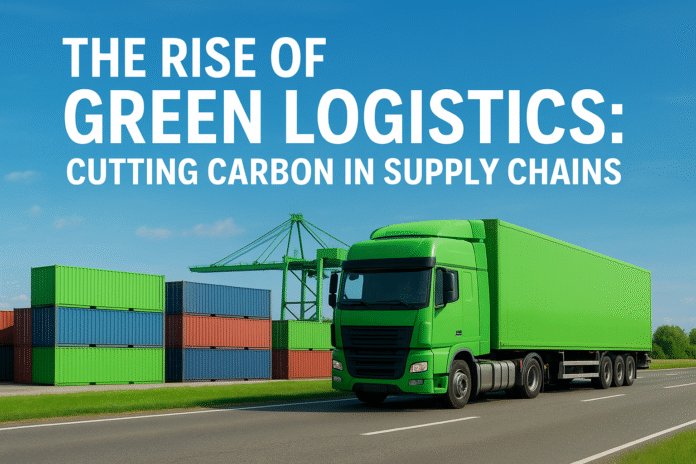

The logistics and transportation industry is the backbone of global trade, moving billions of goods across continents daily. However, this critical sector is also one of the largest contributors to global carbon emissions, accounting for nearly 11% of worldwide greenhouse gas emissions. As climate change and sustainability take center stage, companies are rethinking how they manage logistics. Enter Green Logistics—a growing movement that focuses on reducing the environmental impact of transportation, warehousing, and supply chain operations.
Why Green Logistics Matters
Environmental Impact – Transportation, especially road freight and shipping, is a major source of CO₂ emissions. Reducing this footprint is vital to meeting global climate goals.
Regulatory Pressure – Governments worldwide are introducing stricter emission standards, carbon taxes, and sustainability reporting requirements.
Consumer Demand – Eco-conscious customers prefer brands that adopt sustainable practices.
Cost Efficiency – Contrary to old beliefs, green logistics often lowers operational costs in the long run through fuel efficiency, route optimization, and reduced waste.
Key Strategies Companies Are Using to Reduce Emissions
1. Transition to Electric and Hybrid Fleets
Logistics giants like DHL, UPS, and FedEx are introducing electric delivery vans.
Governments are offering incentives for businesses that invest in EV fleets.
Benefits: lower fuel costs, reduced emissions, and quieter urban transport.
2. Alternative Fuels in Shipping and Aviation
Maritime shipping is adopting liquefied natural gas (LNG), hydrogen, and biofuels.
Airlines are investing in sustainable aviation fuel (SAF) to reduce carbon intensity.
3. Smart Route Optimization & AI Integration
AI-powered logistics software can predict traffic, weather, and delivery times, ensuring minimal fuel usage.
Companies like Amazon and Maersk are using predictive analytics to optimize global routes.
4. Eco-Friendly Warehousing
Warehouses are switching to solar-powered systems, energy-efficient lighting, and smart temperature controls.
Automation and robotics reduce wasted energy by streamlining operations.
5. Last-Mile Innovation
Urban deliveries are shifting to e-bikes, drones, and micro-fulfillment centers.
Retailers like Walmart and Flipkart are investing heavily in EV last-mile delivery fleets.
Case Studies
1. DHL’s GoGreen Program
Target: Achieve zero emissions by 2050.
Investment: Over €7 billion in clean transport technologies.
Actions: EV delivery vehicles, sustainable packaging, and carbon offset programs.
2. Maersk’s Carbon Neutral Vessels
The shipping giant has ordered methanol-powered container ships.
Goal: Net-zero emissions across operations by 2040.
3. Tesla Semi in Freight Transport
With an expected range of 500 miles on a single charge, Tesla’s electric truck is redefining long-haul transportation.
Challenges in Adopting Green Logistics
High Initial Investment – EV trucks, hydrogen ships, and automation systems require significant capital.
Infrastructure Gaps – Limited charging stations and alternative fuel networks slow adoption.
Global Standardization Issues – Different countries have varying emission standards, making global compliance difficult.
The Future of Green Logistics
By 2030, analysts expect over 60% of logistics companies to adopt alternative energy vehicles.
Carbon-neutral supply chains will become a competitive advantage rather than just a compliance requirement.
Digitalization and AI-driven logistics will drive efficiency and sustainability hand in hand.