Technology-Driven Innovation Is Transforming How Consumers Order, Dine, Pay, and Interact with Food Service Brands
The global food service industry is undergoing a significant transformation as restaurants increasingly adopt digital technologies to enhance customer experiences, improve operational efficiency, and remain competitive in an evolving marketplace. From artificial intelligence and self-service kiosks to digital payments and smart kitchen systems, technology is reshaping nearly every aspect of the dining experience.
Consumer expectations have changed dramatically in recent years. Diners now expect convenience, personalization, speed, and seamless digital interactions whether they are ordering online, dining in a restaurant, or using food delivery platforms. As a result, restaurant operators are investing heavily in technology solutions that help meet these expectations while improving profitability and operational performance.
The concept of the "smart restaurant" has emerged as one of the most important trends within the food and beverage sector. Smart restaurants leverage digital tools to optimize customer engagement, streamline workflows, enhance service quality, and generate valuable business insights. Industry experts believe the integration of advanced technologies will continue redefining food service operations as restaurants adapt to changing consumer behavior and increasing competition.
Consumer Expectations Continue to Evolve
Modern consumers expect greater convenience and flexibility than ever before. Technology has transformed how people shop, communicate, and access services, and these expectations now extend to dining experiences.
Today's restaurant customers increasingly value:
- Fast service
- Digital convenience
- Personalized experiences
- Flexible ordering options
- Contactless interactions
- Real-time communication
Businesses that successfully meet these expectations often gain stronger customer loyalty and competitive advantages. Restaurants are therefore prioritizing investments in technologies that simplify interactions and improve overall guest satisfaction. The dining experience is becoming increasingly connected and digitally enabled.
Online Ordering Remains a Major Growth Driver
One of the most significant changes within the food service industry has been the rapid growth of online ordering.
Consumers increasingly use smartphones and digital platforms to:
- Browse menus
- Place orders
- Customize meals
- Schedule pickups
- Arrange deliveries
Online ordering systems provide convenience while enabling restaurants to expand sales opportunities beyond traditional dine-in service. Many operators are integrating ordering platforms directly into their websites and mobile applications to strengthen customer relationships and reduce reliance on third-party services. Digital ordering has become a fundamental component of modern restaurant operations.
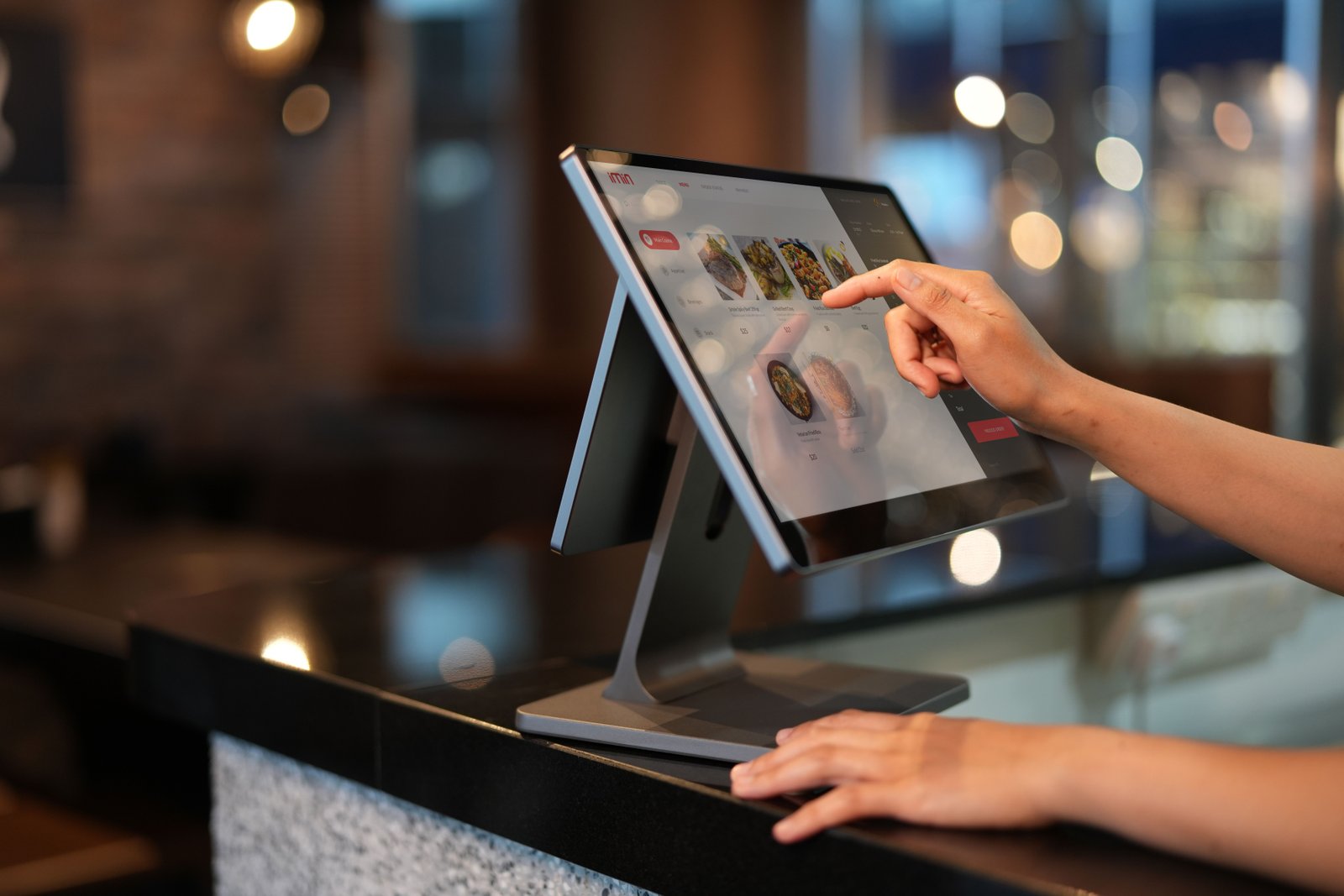
Self-Service Kiosks Improve Efficiency
Self-service kiosks are becoming increasingly common in restaurants, particularly within quick-service and fast-casual dining segments.
These systems allow customers to:
- Place orders independently
- Customize menu selections
- Review nutritional information
- Complete payments
Benefits for restaurants include:
- Reduced wait times
- Improved order accuracy
- Increased operational efficiency
- Enhanced customer convenience
Many businesses report that digital ordering interfaces encourage greater menu exploration and higher average transaction values. As labor challenges continue affecting the industry, self-service technologies are becoming increasingly attractive.
Artificial Intelligence Enhances Customer Experiences
Artificial intelligence is emerging as a powerful tool within the restaurant industry.
AI applications support various aspects of food service operations, including:
- Personalized recommendations
- Demand forecasting
- Customer engagement
- Inventory management
- Marketing optimization
By analyzing customer behavior and purchasing patterns, AI systems can deliver tailored experiences that improve satisfaction and encourage repeat business. Personalization is becoming an important competitive differentiator as restaurants seek to strengthen customer relationships. The ability to deliver relevant and timely recommendations is helping businesses improve both service quality and revenue performance.
Smart Kitchens Improve Operational Performance
Kitchen operations are also benefiting from technological advancements. Smart kitchen systems use connected devices, sensors, and software platforms to monitor and optimize food preparation processes.
Capabilities may include:
- Equipment monitoring
- Temperature management
- Production scheduling
- Inventory tracking
- Workflow optimization
These systems help improve consistency, reduce waste, and enhance operational efficiency. Real-time data allows managers to identify bottlenecks and make informed decisions regarding kitchen performance. Technology-driven kitchen management is becoming increasingly important as restaurants seek to maintain quality while controlling costs.
Contactless Payments Gain Widespread Adoption
Digital payment technologies have become an essential component of modern dining experiences. Consumers increasingly prefer payment methods that offer speed and convenience.
Popular options include:
- Mobile wallets
- QR code payments
- Contactless cards
- Digital payment applications
Contactless transactions help reduce wait times and improve overall customer satisfaction. Restaurants benefit from faster transaction processing and streamlined payment management. As digital payment adoption continues growing globally, cashless and contactless systems are becoming standard features within many food service environments.
Data Analytics Support Better Decision-Making
Restaurants generate large volumes of operational and customer data. Advanced analytics tools help businesses convert this information into actionable insights.
Data can provide visibility into:
- Customer preferences
- Sales performance
- Menu effectiveness
- Operational efficiency
- Marketing outcomes
These insights support better decision-making across multiple areas of the business. Organizations that effectively leverage analytics can improve profitability, optimize operations, and enhance customer experiences. Data-driven management is becoming a critical capability for restaurant operators.
Loyalty Programs Become More Personalized
Digital loyalty programs are evolving beyond simple rewards systems. Modern platforms use customer data to create personalized engagement strategies.
Benefits include:
- Targeted promotions
- Customized rewards
- Enhanced customer retention
- Improved brand engagement
Consumers increasingly expect personalized experiences that reflect their preferences and purchasing behavior. Technology enables restaurants to build stronger relationships while encouraging repeat visits. Loyalty programs remain one of the most effective tools for driving long-term customer value.
Food Delivery Technology Continues Expanding
Food delivery services remain an important growth area within the restaurant industry. Technology platforms have made delivery more accessible and efficient for both businesses and consumers.
Innovations include:
- Real-time order tracking
- Delivery route optimization
- Integrated ordering systems
- Customer communication tools
Restaurants are investing in delivery infrastructure and digital capabilities to support changing consumer habits. The continued growth of delivery services is influencing menu design, packaging strategies, and operational planning. Delivery has become a permanent and influential component of the food service ecosystem.
Automation Helps Address Labor Challenges
Labor shortages remain a significant concern for many restaurant operators. Technology is helping businesses improve productivity through automation solutions.
Applications include:
- Order processing
- Kitchen operations
- Inventory management
- Customer service support
Automation enables staff to focus on higher-value activities while reducing repetitive administrative tasks. Rather than replacing employees entirely, many systems are designed to improve workforce efficiency and support service quality. The balance between human hospitality and technological efficiency is becoming increasingly important.
Sustainability Benefits from Digital Innovation
Technology is also supporting sustainability initiatives within the food service sector.
Digital systems help restaurants reduce waste through:
- Better inventory management
- Accurate demand forecasting
- Resource optimization
- Energy monitoring
Improved operational efficiency often leads to lower environmental impacts and reduced costs. Consumers increasingly appreciate businesses that demonstrate commitment to responsible practices. The connection between technology and sustainability is becoming stronger across the industry.
Challenges Remain
Despite significant progress, digital transformation presents challenges for restaurant operators.
Common concerns include:
- Technology implementation costs
- Cybersecurity risks
- Staff training requirements
- System integration complexity
- Customer adoption variations
Successful technology adoption requires careful planning and ongoing investment. Restaurants must ensure that digital solutions enhance rather than complicate customer experiences. Balancing innovation with operational practicality remains a key consideration.
Conclusion
Smart restaurants and digital dining experiences are reshaping the future of food service. Advancements in artificial intelligence, online ordering, contactless payments, smart kitchen systems, data analytics, and automation are helping restaurants meet evolving consumer expectations while improving operational performance. Technology is no longer viewed as a supplementary tool but as a core component of modern restaurant strategy.
Businesses that successfully integrate digital innovation into their operations are better positioned to enhance customer satisfaction, improve efficiency, and remain competitive in a rapidly changing market. As consumer behavior continues evolving, smart restaurant technologies will play an increasingly important role in defining how people discover, order, consume, and engage with food. The transformation of food service through technology represents one of the most significant developments in the food and beverage industry, creating new opportunities for growth, innovation, and customer engagement across global markets.