Introduction
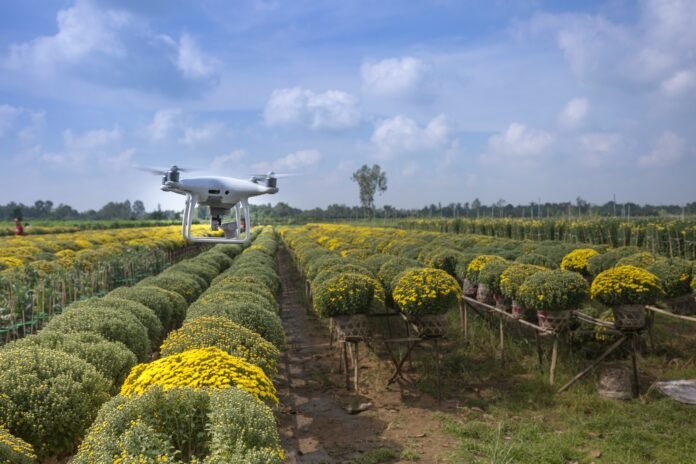
As global demand for food continues to surge, agriculture is facing unprecedented pressure to produce more with fewer resources. The convergence of Artificial Intelligence (AI) and agriculture is revolutionizing the global food system—boosting efficiency, sustainability, and profitability. From drone-based crop monitoring in Africa to AI-powered food sorting in Europe, technology is transforming every step from farm to fork.
Understanding AI in Agriculture
Artificial Intelligence refers to computer systems capable of performing tasks that typically require human intelligence—learning, reasoning, problem-solving, and decision-making. In agriculture and food production, AI integrates data science, robotics, IoT, and predictive analytics to enable smarter farming practices.
AI empowers farmers to collect and analyze massive amounts of data—from soil and weather to satellite imagery—and make precise, real-time decisions that improve yields, reduce waste, and optimize input use. The result: a more resilient and efficient food ecosystem.
Applications of AI Across the Global Food Chain
1. Precision Agriculture and Smart Farming
AI enables data-driven precision agriculture. By analyzing soil composition, moisture, and nutrient data, AI algorithms determine when and where to plant, irrigate, or fertilize. Tools like IBM’s Watson Decision Platform for Agriculture and Microsoft’s FarmBeats use satellite and sensor data to deliver hyperlocal recommendations to farmers.
2. Crop Monitoring and Disease Detection
AI-powered drones and cameras equipped with computer vision can detect plant stress, nutrient deficiency, and pest infestation earlier than the human eye. Startups like PEAT (Germany) and Plantix (India) provide mobile AI apps that allow farmers to photograph crops and receive instant diagnoses and treatment suggestions.
3. Smart Irrigation and Water Management
AI-driven irrigation systems reduce water usage by up to 30% while maximizing productivity. These systems use sensors and weather forecasts to automate irrigation schedules. In Israel and California, AI irrigation models have become a gold standard for water-scarce regions.
4. Predictive Analytics for Yield Forecasting
Machine learning algorithms predict yield outcomes based on weather, soil, and crop health data. Governments and agribusinesses use these insights for supply chain planning, pricing strategy, and risk management.
5. Robotics and Automation
AI-guided robots are performing labor-intensive tasks like harvesting, pruning, and weeding. For example, Agrobot in Spain and Blue River Technology (acquired by John Deere) have developed AI machines that differentiate between crops and weeds, applying herbicides only where needed.
6. Food Processing and Quality Control
In the food industry, AI-based systems monitor production lines using sensors and cameras to detect defects, contamination, or spoilage. Nestlé and Unilever are investing heavily in AI-driven food safety and packaging automation to enhance consistency and reduce waste.
7. Supply Chain Optimization
AI optimizes global food logistics through demand forecasting, route optimization, and cold-chain management. Platforms like IBM Food Trust use blockchain combined with AI to enhance traceability, transparency, and sustainability across the global food chain.
Benefits of AI in Global Food Systems
– Increased productivity through data-driven insights.
– Lower environmental impact via efficient use of resources.
– Early detection of diseases and pests.
– Reduced food waste through predictive demand and supply management.
– Improved transparency and food safety.
AI and Sustainability
AI supports the transition to climate-smart and sustainable agriculture by minimizing fertilizer runoff, cutting water usage, and optimizing energy consumption. Combined with renewable energy and precision farming, it helps build a low-carbon, circular food economy.
Challenges and Barriers to Adoption
Despite its promise, AI adoption faces obstacles:
– High costs of implementation and maintenance.
– Limited access to reliable data in developing countries.
– Lack of digital literacy among smallholder farmers.
– Ethical concerns around data ownership and privacy.
– Infrastructure gaps, including internet connectivity in rural areas.
Global Case Studies
1. Europe – Smart Dairy Farming in the Netherlands
AI sensors track cow health, milk yield, and feeding patterns, helping farmers boost output and reduce antibiotic use.
2. Asia – Rice Yield Optimization in Japan
AI-powered robots assist farmers by predicting the best sowing times, fertilizer schedules, and harvesting windows based on real-time data.
3. Africa – Drone Monitoring for Small Farmers
In Kenya and Nigeria, drone-based crop analytics are helping small-scale farmers increase yields by up to 20% while reducing pesticide use.
The Future of AI in Global Food Systems
The future of AI in food production is dynamic and transformative. As computing power grows and data becomes more accessible, AI will move beyond prediction to autonomous decision-making. The integration of 5G, IoT, and cloud computing will accelerate precision agriculture adoption globally.
By 2030, AI in agriculture is expected to be a $11 billion market, reshaping how the world grows, distributes, and consumes food. The synergy between AI, biotechnology, and sustainability will define the next green revolution.
How Artificial Intelligence is Revolutionizing Global Food Production