
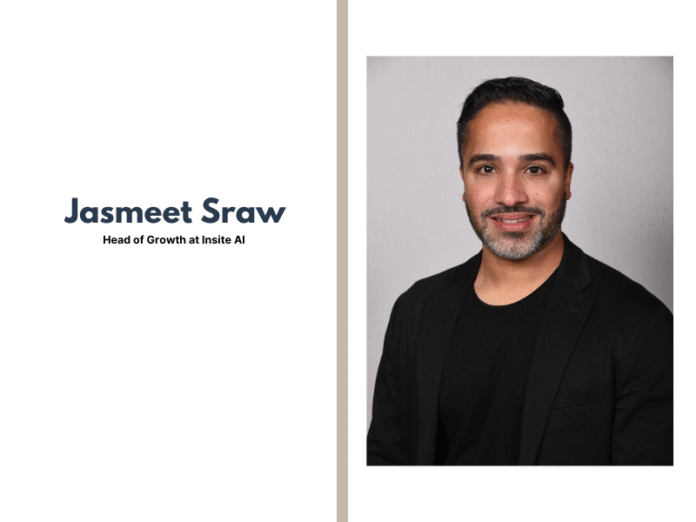

In today’s world of digital disruption, where algorithms drive strategy and AI shapes decision-making, few leaders stand out for combining technical brilliance with deep human understanding. Jasmeet Sraw, Head of Growth at Insite AI, is one of them.
Across his career in analytics, AI, and business transformation, Jasmeet has built a leadership philosophy grounded in one simple but powerful idea — trust. To him, data alone doesn’t transform organizations; people do, when they believe in what that data represents.
“Numbers can inform decisions, but belief inspires action,” he says. “When people begin to trust data the same way they trust experience, transformation becomes real.”
From Data to Direction: A Journey of Purpose
Jasmeet’s professional journey began at IBM, during the formative years of data analytics. Back then, analytics was often seen as a technical function — complex, backend, and disconnected from leadership decisions. Yet Jasmeet saw something deeper.
He noticed that while organizations were fascinated by numbers, very few trusted them enough to act boldly. That observation sparked a lifelong mission to turn analytics into a bridge between people and progress.
Over time, his work evolved beyond the mechanics of models and dashboards. Today, at Insite AI, Jasmeet leads growth and strategy initiatives that help major consumer goods and retail brands translate complexity into confidence.
“My role isn’t about technology,” he explains. “It’s about connecting ambition to belief — helping teams trust what their insights are telling them, and act with conviction.”
Leadership Built on Trust and Consistency
Through years of transformation projects, Jasmeet has come to define leadership not by authority, but by clarity, consistency, and empathy. For him, influence isn’t gained through titles — it’s earned through reliability.
He recalls how his most successful projects succeeded not because of flawless code, but because of shared trust. “When people feel safe to question, challenge, and contribute, transformation accelerates,” he reflects. “That’s when real collaboration begins.”
This approach defines his work at Insite AI, where his leadership style merges technical rigor with emotional intelligence. Clients know him as a partner who stays committed long after the contract ends — until measurable impact is visible.
“Trust is built in follow-through,” Jasmeet notes. “Transformation doesn’t end when a system goes live — it ends when people believe in the system they helped create.”
Data, AI, and the Human Equation
Ask Jasmeet about the future of AI, and his answer blends innovation with humility. He sees AI not as a replacement for human judgment, but as an amplifier of it.
“AI and data are transformative,” he says, “but only when surrounded by trust. Technology accelerates insight, but people give it meaning.”
Under his guidance, Insite AI integrates analytics and artificial intelligence to create platforms that empower decision-makers. But the focus, he insists, is never just the tool — it’s the connection between the data and the people using it.
“Technology can tell you what’s happening,” he adds. “But trust determines whether anyone acts on it.”
Transformation Rooted in Listening
One of Jasmeet’s most meaningful projects involved guiding a global consumer goods company through a massive data modernization effort. The goal was to unify fragmented systems and create a single version of truth.
But instead of diving straight into technical solutions, Jasmeet’s team began by listening. They spent weeks understanding what each team valued and why conflicting “truths” existed in the first place.
“The real transformation wasn’t in the system we built,” he recalls. “It was in the conversations we had. When people felt heard, they began to believe in shared data again.”
The outcome was not just a modern data platform — it was a culture shift from compliance to conviction.
Collaboration as a Competitive Advantage
Jasmeet believes that collaboration thrives at the intersection of humility and alignment. In his view, transformation doesn’t fail because of capability gaps — it fails because teams aren’t aligned on purpose.
To solve that, he builds what he calls “trust intersections,” where cross-functional teams — from marketing to supply chain — come together to understand how their work connects.
“When people see how their contribution impacts others, they stop protecting silos and start building systems,” he says. “That’s when acceleration really happens.”
His collaborative approach ensures that innovation isn’t chaotic — it’s cohesive.
Innovation with Accountability
At Insite AI, Jasmeet has helped redefine how innovation stays aligned with business outcomes. He warns against innovation for the sake of novelty.
“Innovation without direction creates noise, not progress,” he says. “Purpose gives creativity discipline.”
Before launching any initiative, his team asks one simple question: “What problem are we solving, and who will it help?”That clarity ensures every experiment is grounded in business value — improving forecast accuracy, marketing investments, or operational agility.
For Jasmeet, innovation and accountability are inseparable. “When people see their ideas leading to impact, creativity becomes sustainable,” he adds.
Technology that Empowers, Not Replaces
For all his focus on AI, Jasmeet remains adamant that technology is only as valuable as the behavior it enables. He believes adoption is the true measure of success — not implementation.
“The best-designed systems fail if people don’t see themselves in them,” he says. “My job is to make technology feel like a natural extension of their judgment, not a replacement for it.”
This balance — between innovation and empathy — defines his philosophy of responsible transformation.
“Change isn’t resisted because of technology,” Jasmeet observes. “It’s resisted because of fear. When people feel trusted, transformation becomes organic.”
Building a Culture of Confidence
Jasmeet defines success not by metrics alone but by trust that endures. “Growth, accuracy, adoption — they’re important,” he acknowledges. “But the true sign of impact is when a client calls months later and says, ‘We’re thinking differently now because of what we built together.’”
This people-first mindset extends to how he helps organizations build data-driven cultures. His approach focuses on making data relatable, transparent, and empowering — not intimidating.
“When teams see data as a tool that enables, not judges, adoption becomes natural,” he explains.
Global Mindset, Local Wisdom
Having led initiatives across continents, Jasmeet understands that intelligence is contextual. What works in one market may not in another.
“Trust doesn’t scale automatically — it must be earned locally,” he reflects. His global experience has taught him to adapt technology and strategy to each region’s pace, culture, and language.
“Diversity isn’t a challenge to manage,” he says. “It’s an amplifier of innovation. Respect is what unites global teams.”
Balancing Today’s Wins with Tomorrow’s Vision
Transformation, Jasmeet says, requires balance — between urgency and endurance. He often starts with small, visible wins that build confidence, but he never loses sight of the long-term destination.
“Short-term wins build belief,” he explains. “But long-term vision sustains transformation.”
He views every milestone as a stepping stone toward sustainable capability, ensuring progress feels cumulative, not fragmented.
Human Leadership in a Data-Driven Era
When asked about the qualities that define modern leadership, Jasmeet highlights empathy, conviction, and consistency.
“Empathy helps you hear what isn’t being said,” he shares. “Conviction gives you courage when clarity is missing. And consistency builds trust — the glue that holds everything together.”
For him, leadership isn’t about charisma, but about clarity. “People follow direction more than energy,” he says. “They want leaders who communicate transparently and own their outcomes.”
A Vision for the Future of AI
Looking ahead, Jasmeet is optimistic about the evolution of AI from automation to augmentation. The next generation of systems, he believes, will amplify human judgment rather than replace it.
“The real opportunity isn’t in building bigger models,” he notes. “It’s in applying them thoughtfully — in ways that deepen human understanding.”
He sees contextual intelligence — AI that interprets human behavior and emotion — as the future frontier, especially in retail and consumer goods. “It’s about empathy at scale,” he says. “When AI helps us understand people better, it becomes transformative.”
Purpose, Trust, and Legacy
After years of leading transformation programs around the world, Jasmeet’s guiding principles remain unchanged — authenticity, trust, and purpose.
“Leadership is not about being the loudest voice in the room,” he says. “It’s about creating space for others to speak with confidence.”
He believes that innovation, adoption, and growth all flow from that foundation.
“When people trust your intent,” Jasmeet concludes, “they’ll trust your direction. That’s when transformation becomes not just successful, but meaningful.”