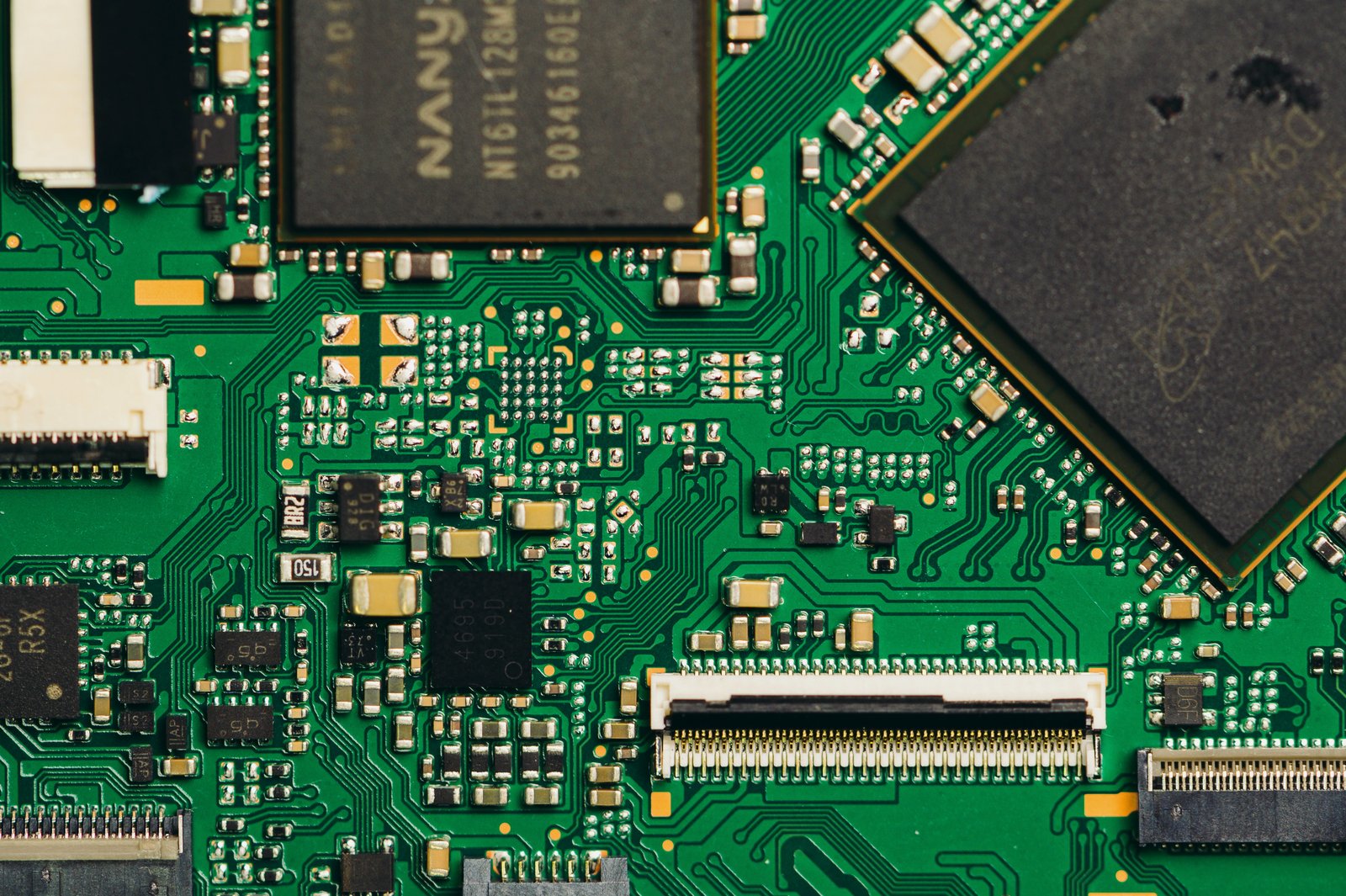
Breakthroughs in Hardware, Error Correction, and Enterprise Research Accelerate the Next Era of High-Performance Computing
Quantum computing is steadily moving from experimental research laboratories toward practical commercial applications, marking one of the most significant technological developments in modern computing. While traditional computers continue to power today's digital economy, quantum computers are being designed to solve highly complex problems that would take conventional systems an impractical amount of time to process.
Governments, research institutions, and leading technology companies are significantly increasing investments in quantum technologies as advancements in quantum hardware, software development, and error correction continue to improve system performance. Although large-scale commercial deployment remains in its early stages, recent progress suggests that quantum computing is gradually becoming a viable tool for scientific research, industrial innovation, and enterprise problem-solving.
Industries including pharmaceuticals, finance, manufacturing, logistics, energy, aerospace, and cybersecurity are actively exploring how quantum computing can optimize operations, accelerate research, and solve computational challenges that exceed the capabilities of classical computers. Technology analysts believe that while quantum computing will not replace traditional computing, it will complement existing systems by addressing specialized workloads that require extraordinary computational power.
Understanding Quantum Computing
Traditional computers process information using binary bits that exist as either zero or one. Quantum computers use quantum bits, commonly known as qubits, which operate differently because they utilize principles of quantum mechanics. Unlike classical bits, qubits can represent multiple computational states during calculations, enabling quantum systems to evaluate numerous possibilities simultaneously.
This unique capability makes quantum computers particularly effective for solving highly complex mathematical and optimization problems. Although quantum computing introduces a fundamentally different approach to information processing, it is designed to work alongside conventional computing rather than replace it. Organizations are increasingly adopting hybrid computing strategies that combine classical and quantum technologies for specialized applications.
Hardware Innovation Continues to Advance
Developing stable and reliable quantum hardware remains one of the industry's greatest engineering challenges.
Researchers continue improving:
- Researchers continue improving:
- System scalability
- Processor performance
- Cooling technologies
- Hardware reliability
Each advancement contributes to the long-term goal of building larger and more capable quantum systems. Technology companies are developing multiple hardware approaches using different physical architectures, each offering unique advantages and technical challenges. Competition within the quantum hardware sector is driving rapid innovation while expanding commercial research opportunities. Continued investment is accelerating progress toward practical quantum computing platforms.
Error Correction Strengthens System Reliability
One of the most significant obstacles facing quantum computing has been computational errors. Qubits are highly sensitive to environmental disturbances, making calculations vulnerable to inaccuracies. To address this challenge, researchers are developing advanced quantum error correction techniques that improve system reliability.
Error correction helps:
- Reduce computational inaccuracies
- Improve calculation stability
- Support longer processing times
- Increase confidence in results
Although significant technical work remains, continued improvements in error correction are bringing commercial quantum applications closer to reality. Reliable computation is considered essential for widespread enterprise adoption.
Pharmaceutical Research Benefits from Quantum Computing
Drug discovery represents one of the most promising commercial applications for quantum computing. Developing new medicines often requires enormous computational resources to simulate molecular interactions.
Quantum computing has the potential to accelerate:
- Molecular modeling
- Protein interaction analysis
- Drug candidate evaluation
- Chemical simulations
Faster simulations could reduce research timelines while helping scientists identify promising compounds more efficiently. Although practical deployment remains under development, pharmaceutical organizations continue investing in quantum research partnerships. Healthcare innovation is expected to become an important long-term application area.
Financial Institutions Explore Advanced Analytics
The financial services sector is actively investigating quantum computing for complex analytical tasks.
Potential applications include:
- Portfolio optimization
- Risk modeling
- Fraud detectio
- Market simulations
- Investment analysis
Financial organizations regularly process vast quantities of data that require sophisticated mathematical calculations. Quantum systems may eventually improve the speed and accuracy of certain analytical models. While production deployments remain limited, financial institutions continue participating in quantum research initiatives to prepare for future commercial capabilities.
Manufacturing Optimization Gains Attention
Manufacturing companies are evaluating quantum computing as a tool for improving operational efficiency.
Potential use cases include:
- Production scheduling
- Material science research
- Supply chain optimization
- Process simulation
- Product design
Manufacturers often manage highly complex operational environments involving thousands of interconnected variables. Quantum optimization techniques may help organizations identify more efficient production strategies than conventional methods alone. Industrial research continues expanding as hardware capabilities improve.
Logistics and Transportation Applications Expand
Supply chain and logistics operations involve numerous optimization challenges.
Quantum computing may eventually assist organizations with:
- Delivery route optimization
- Fleet management
- Warehouse planning
- Cargo allocation
- Transportation scheduling
Even small efficiency improvements across large logistics networks can generate significant operational benefits. Retailers, logistics providers, and transportation companies are exploring future quantum applications as part of broader digital transformation strategies. Optimization remains one of the strongest commercial opportunities for quantum technologies.
Artificial Intelligence and Quantum Computing Converge
Researchers are increasingly exploring how quantum computing can complement artificial intelligence.
Potential areas of collaboration include:
- Machine learning optimization
- Pattern recognition
- Complex data analysis
- Predictive modeling
Although quantum AI remains an emerging field, researchers believe the combination of both technologies may accelerate future innovation. Classical AI systems are expected to remain dominant for most commercial applications, while quantum computing may enhance highly specialized analytical workloads. The convergence of these technologies continues attracting research investment worldwide.
Governments Increase Strategic Investment
Quantum computing has become a national strategic priority for many countries.
Governments are supporting research through investments in:
- University partnerships
- National laboratories
- Technology startups
- Research funding
- Workforce development
Public investment aims to strengthen scientific leadership while supporting future economic competitiveness. International collaboration and competition are both contributing to rapid technological progress. Governments recognize quantum technologies as important components of future digital infrastructure.
Workforce Development Becomes Essential
As quantum technologies mature, demand for specialized talent continues growing.
Organizations require professionals with expertise in:
- Quantum physics
- Computer science
- Mathematics
- Software engineering
- Information theory
Universities and research institutions are expanding educational programs to prepare future quantum professionals. Interdisciplinary collaboration is becoming increasingly important as quantum computing intersects with multiple scientific and engineering disciplines. Building a skilled workforce remains essential for long-term industry growth.
Cybersecurity Implications Receive Greater Attention
Quantum computing presents both opportunities and challenges for cybersecurity. While quantum technologies may strengthen certain security applications, they could also affect existing encryption methods over time.
Organizations are therefore preparing for future developments by researching:
- Quantum-resistant encryption
- Advanced cryptography
- Secure communications
- Digital identity protection
Cybersecurity planning has become an important component of quantum technology strategies. Businesses are monitoring developments closely while preparing for long-term transitions.
Challenges Remain Before Large-Scale Adoption
Despite remarkable progress, quantum computing continues facing significant technical and commercial challenges.
These include:
- Hardware complexity
- High development costs
- Error correction requirements
- Limited scalability
- Specialized infrastructure
Commercial deployment will likely occur gradually as technology matures. Organizations continue balancing research investments with realistic expectations regarding near-term capabilities. Steady progress remains more important than rapid deployment.
Conclusion
Quantum computing is steadily progressing from scientific experimentation toward practical commercial applications. Advances in hardware development, error correction, software platforms, and industry collaboration are creating new opportunities across pharmaceuticals, finance, manufacturing, logistics, artificial intelligence, and scientific research.
Although traditional computers will continue powering most business operations, quantum systems are expected to provide unprecedented computational capabilities for solving specialized problems beyond the reach of classical computing. As governments, research institutions, and technology companies continue investing in quantum innovation, the industry is moving closer to a future where quantum computing becomes an integral part of advanced enterprise and scientific computing.
The continued evolution of quantum technology represents one of the most exciting frontiers in modern computing, offering the potential to transform industries, accelerate scientific discovery, and unlock solutions to some of the world's most complex computational challenges.